Tuesday, December 08, 2009

Modern material culture: confectionary packages

These fancy boxes have obliterated any memory of their plainer predecessors. The jelly sticks were ordered as a surprise for the person in the household who loves them. They came via Vermont Country Store and the contents were made by Sweet's Candy of Salt Lake City, "a family tradition since 1892." I don't know why the boxes are of slightly differing dimensions. The display typeface is one that has been quite popular recently. Central Market was using it for ads and promotional literature until a short time ago, and some other enterprise has been employing it in Chron ads. Vermont Country Store does not offer the dark-chocolate raspberry sticks. I treat myself to Wilbur Buds; everyone called Hershey Kisses "buds" when I was a kid. Wilbur Buds are more refined and less grainy than the Hershey product. According to the Wilbur history page, Buds date from 1894. Hershey Kisses made their debut in 1907. I like them both. This entry is also part of the continuing scan-o-rama series.

December 1980 books read

David P. Handlin: The American Home: Architecture and Society 1815-1915
Paul Fussell: Abroad: British Literary Traveling Between the Wars
Angela Thirkell: Wild Strawberries
Anthony Trollope: Christmas at Thompson Hall
Robertson Davies: Fifth Business
Robertson Davies: The Manticore
Robertson Davies: World of Wonders
Tom Dardis: Keaton: The Man Who Wouldn't Lie Down

The Trollope was reprinted in 1978 (with facsimiles of the original illustrations) by Caledonia Press of Racine, Wisconsin, as part of the Harting Grange Library series.

Monday, December 07, 2009

Aftermath

Following the recent killing frost, we waited a bit to see what's done for the season. It appears that we'll see no more of the morning glories, tithonia, zinnias, cosmos, clockvine, basil in pots, and volunteer nasturtiums. Rosemary, thyme, and oregano, all in pots, are doing fine no matter where they are; the same is true of all the fennel, which is in the ground in various places. All spider plans, whether in pots or in the ground, are unscathed. There's not one lantana without purple, frizzled leaves. About half the Turk's cap has green leaves; the other half has shriveled and falling leaves. The pecan had half its leaves down before the cold arrives and half still partly green; now only about a third remain on the tree and there's no green to be seen. Hyacinth beans look pretty well done for, no matter what their location. Potted schefflera is fine. What's most surprising is that the two geraniums in pots that survived the summer's rigors are unscathed, even the one hanging in a pot that would have been surrounded by cold air. Roses are untouched. All milkweeds are in pots. Some look fine and others don't. Whether the flowers were all yellow or orange-red and yellow didn't seem to matter. I hope that most will carry on because many were in the pod-formation stage. Remaining wild sunflowers appear to be done. Other wildflowers, flowers and leaves of spring bulbs, various spring vegetables and flowers, plumbagoes in the ground, kalanchoes and sansevierias in pots, and the fruiting process on the loquats appear to be unaffected. The pumpkin seedlings have expired.

Sunday, December 06, 2009

December 1978 books read

Salka Viertel: The Kindness of Strangers
John Glassco: Memoirs of Montparnasse
Leon Edel: Henry James: The Middle Years 1882-1895
Leon Edel: Henry James: The Treacherous Years 1895-1901
Leo Tolstoy: Family Happiness
Leo Tolstoy: The Cossacks
Leo Tolstoy: The Death of Ivan Ilych
Leo Tolstoy: The Devil
Leo Tolstoy: The Kreutzer Sonata
Leo Tolstoy: Master and Men
Leo Tolstoy: Father Sergius
Henry Green: Loving
Henry Green: Living
Henry Green: Party Going
Gordon S. Haight: George Eliot: A Biography
Peter A. Dickinson: Sunbelt Retirement
Robert Schrank: Ten Thousand Working Days
Robert Coles: Privileged Ones
Marc Simmons: New Mexico
Sophy Burnham: The Landed Gentry
Edward A. Wynne: Growing Up Suburban

I've read Henry Green again a couple of times since, enjoying the work no more a second or third time.

Saturday, December 05, 2009

December 1977 books read

S. J. Perelman: Westward Ha!
Norman Douglas: South Wind
Grace Lichtenstein: Desperado
Michael Medved and David Wallechinsky: What Really Happened to the Class of '65?
Moffat, Mary Jane, and Painter, Charlotte, ed.: Revelations: Diaries of Women
James Fenimore Cooper: Satanstoe
Conrad Aiken: Ushant

Friday, December 04, 2009

December 1976 books read

M. Dorothy George: England in Transition: Life and Work in the Eighteenth Century
A. S. Turberville, ed.: Johnson's England, vol. 1
A. S. Turberville, ed.: Johnson's England, vol. 2
John G. Waite: The Architecture of Lansingburgh, New York

Thursday, December 03, 2009

December 1975 books read

B. S. Johnson, ed.: The Evacuees
Anthony Trollope: Framley Parsonage
Paul Theroux: The Great Railway Bazaar
Lytton Strachey: Eminent Victorians
Mark Twain: Following the Equator
Arnold Bennett: Teresa of Watling Street
George Gissing: Eve's Ransom
Arnold Bennett: The Gates of Wrath
George Gissing: The Town Traveller
George Gissing: The Odd Women
Arnold Bennett: Riceyman Steps

The library at that time had an excellent collection of books by Bennett and Gissing. A coy of Riceyman Steps was in the house when I was a kid.

Wednesday, December 02, 2009

December 1974 books read

Anthony Trollope: The McDermotts of Ballycloran
Anthony Trollope: The Vicar of Bullhampton
Thornton Wilder: Theophilus North
Anthony Trollope: Mr. Scarborough's Family

I've read The McDermotts only once. I've been thinking of reading lots of Thornton Wilder again. He's out in the Library of America, but somehow I find those books not inviting. I still read the work of Wm. Dean Howells again in other versions, despite now owning the LoA volumes.

Tuesday, December 01, 2009

December 1973 books read

This is part of the continying transcription of an old record.

Jane Austen: Mansfield Park
Jane Austin: Emma
Jane Austen: Northanger Abbey
Jane Austin: Persuasion
Charles Dickens: Martin Chuzzlewit
Kate Chopin: The Awakening
Anthony Trollope: Rachel Ray
Richard D. Altick: Victorian Studies in Scarlet.

All but the last were not read for the first time.

Friday, November 27, 2009

In the pleasure grounds, and out of order

Today visible for the first time are leaves of Lilac Wonder species tulips. These leaves are usually the last species leaves to appear. There's also a wildly cut and fringed red anemone. The paperwhites in the first and so far only clump are holding up well, with many bloom stalks. There's another clump of those mystery two-tone jonquils with buds on it. There's one flower stalk (still with an unbroken bud) in Mack's flower bed among the clumps of Montopolis narcissi that came from Bastrop. The loquat flowers are still abuzz with bees and butterflies. Something has attracted a large flock of chickadees. Some of these flower appearances are usually made much later in the season.

Sunday, November 22, 2009

Tweetsville, life in

It's been almost a year, now, of tweeting. That's this time around. When it was The Thing at SxSW, it didn't seem interesting. Then I tried Twitter again. I find that I do enjoy seeing what's floating around in the collective consciousness. I also like it that it no longer asks "What are you doing?" or whatever it asked up until a few days ago. I like "What's happening?" much better.

Saturday, November 21, 2009

An editorial oversight

I'm enjoying reading Farewell: A Memoir of a Texas Childhood, by Horton Foote, but I did think it was funny to come across a reference to "Gala Curchi," when it's clear that the reference is to Amelita Galli-Curci. Suddenly, all the books of Horton Foote seem to be disappearing from the library shelves. In addition to Farewell, I wanted to read Beginnings, but it's been stolen.

Friday, November 20, 2009

Another unexpected early arrival

There are two flower stalks with open flowers already, and more budded stalks visible, in front of Mack's flower bed, sprung up in the grass. They are tall and very tiny bicolored jonquils, three or four to a thin stalk, with a tiny lemon-yellow cup and a white perianth. We have never seen these so early, whatever they are. They are not sturdy narcissi, not Avalanche, not Grand Primo. They must have come to us in a mix.

Thursday, November 19, 2009

PCBs, mercury, and strontium 90

Not snakes, snails, and puppy-dog tails. And not sugar and spice and everything nice. The cover story for the December issue of Harper's Magazine is about the degradation and probably eternal ruination of the Hudson and the Housatonic ("The General Electric superfraud: Why the Hudson River will never run clean," by David Gargill). Among the interesting factoids is that eels concentrate the poisons; I thought they just ruined nets and fishing lines. The dredged sediment will be stored in Andrews County, Texas, in part of the Ogalalla aquifer. We used to fish at the base of the dam, now gone, at Fort Edward; and we ate what we caught. Strontium 90? That's not mentioned in this article and that episode isn't a well-known one, even now, almost as secret as it was when it happened. I didn't drink treated water until 1966. I still don't like the way it tastes, and I can taste the over-sweetening with charcoal (carbon) in Austin water at certain times and also in bottled water of some brands.

Wednesday, November 18, 2009

Scarlet on top

I saw so many of them so close that I could describe every characteristic, even though I couldn't remember what they're called. First, I heard a high, faint whistling call. As I stood still trying to see what made the noise, I realized that the tiny birds were all around me, among the butterflies and honeybees in the loquat flowers. The birds were all all levels, from my knees to just above my head. I could have touched some of them, have I dared to move and been quick enough. I could look down and see the large scarlet patch on atop the head of a male within a foot of me. Ruby-crowned kinglets! I'm so glad that they dropped in and that I stopped by and saw them. That's what I call a lunch-time treat! (Here are some good backyard close-ups, although the ruby is not displayed in full splendor.)

Saturday, November 14, 2009

Modern material culture: cap erasers

This is a bad scan of a unique package; each wheel is visible beneath a clear, vacuum-formed cover. I think that this particular item was found in a gas-station convenience store. We buy some of this type of eraser every year to cover the ends of the pencils used to prop open the transom lights all summer long. They make the pencils into non-skid and non-marking devices. But they do last only one summer, disintegrating over time from the heat. When we went to look more closely at these, we couldn't find it in our hearts to open the package, with its two wheels of erasers, assorted. The assortment of erasers constituting the twin "Cap Eraser Wheels" includes: "4 glitter-caps," "4 glow-in-the-dark caps," "5 Geddes caps," "5 happy caps," and "4 chameleon color-changing caps," or 22 in all. The consistent and proper use of hyphenated compound adjectives is very rare these days. Without opening the package, we'll never know what makes a "happy" cap or what, a "Geddes" cap. Perhaps a Geddes cap is undistinguished by any distinguishing feature. Maybe there's a happy face on the jolly erasers. We are warned that these are a choking hazard and not for children under the age of four. This is "yet another product from Geddes Design Studio," for Raymond Geddes & Company, Inc., of Yellow Brick Road in Baltimore. The back of the package encourages us to "make it fun with Geddes!"

Friday, November 13, 2009

Merrimints

They no longer exist. Who made them? Schrafft's? Fanny Farmer? There were five flavors: peppermint, spearmint, orange, lemon, and (my favorite) wintergreen. Lamme's Sherbet Mints are of the same type, but peppermint only. At last, Vermont Country Store is selling an excellent modern-day version, minus the orange flavor. They are ridged on the bottom and, I believe, slightly smaller and perhaps a bit more cristalline in texture. But they are delicious, and very fresh. It appears possible that they may be shopped direct from the confectioner, which turns out to be Oliver's Candies, of Batavia, New York. Wintergreen! It's time to find some Canada Mints again. I've read that wintergreen is not a favorite modern flavor. It's certainly becoming more and more difficult to find Wint-O-Green Life Savers. And forget about clove! Does Life Savers even make rolls of clove or Cin-O-Mon these days?

Thursday, November 12, 2009

New flowers arriving daily

They're really returnees. Seen very early today for the first time this season were clockvine (black-eyed Susan vine, thunbergia alata) of strong orange-yellow with a black center, in admidst the morning glories at the fence corner; several flowers on the chicory that at some time in the past mysteriously appeared in a pot of something else, adding a welcome note of blue; several rudbeckias (black-eyed Susans), with many more on the way; and, oddest of all, a large fringed purple St. Brigid anemone. We still have tithonia (Mexican sunflower) and cosmos of five different colors.

Wednesday, November 11, 2009

On the eleventh hour of the eleventh day

There will be a parade on Congress in observance of the day, whether we call it Veterans Day or are old enough to remember it as Armistice Day. All week long, searches on "yellow butterflies" and "tomb of the unknown" have brought people to this blog who remember having heard or read the story by Mary Raymond Shipman Andrews. On line today, I've found yet another retelling in paraphrase of this tear-jerking, yet emotionally effective, old chestnut of a story, this one from the newspaper in Orange, Texas. The author is not credited, but this furnishes additional evidence that the story is far from forgotten.

Tuesday, November 10, 2009

Brief bulletin from the yarden

This may be the very earliest that we've ever had flowers from paperwhite narcissus in the yard. As always, it's from one of the old pots of forced bulbs just dumped out at some random place, this one in the middle of the grass in the side yard near the fence. Either someone released some or they just hatched on their own, but we've been seeing hundreds of green lacewings, very pretty, joining the honeybees and the monarch butterflies and gulf fritillaries. Peas of various kinds are enjoying this coolor weather, and nasturtiums, mostly the climbing sort, I think, have self-sown themselves in several places. Morning glories love this weather, too, as do many other flowers. The scents of loquat flowers and of hyacinth beans are heavy whenever the air is still. Three small pumpkins are intact, but one smaller one and the two carved as jack-o'-lanterns have sunk away and become diminished. Seeds scooped from them are germinating, and the plants will be pretty for as long as they last.

Monday, November 09, 2009

November 1981 books read

Jonathan Raban: Old Glory: An American Voyage
Dervla Murphy: In Ethiopia With a Mule
Tom Driberg: Ruling Passions
Jane Grigson: Vegetable Book
Edward Hoagland: African Calliope: A Journey to the Sudan

Sunday, November 08, 2009

November 1980 books read

Virginia Woolf: Diary vol. 2 1920-24
E. K. Brown: Willa Cather
Angela Thirkell: August Folly
Angela Thirkell: High Rising

Saturday, November 07, 2009

November 1979 books read

Pamela Hansford Johnson: Too Dear for My Possessiong
Gerald Brenan: Pewrsonal Record 1920-1972
Elizabeth Hardwick: A View of My Own
Amy Cruse: The Victorians and Their Reading
George Meredith: Modern Love

Friday, November 06, 2009

November 1978 books read

Doris Lessing: A Man and Two Women
Herman Melville: Redburn
Algernon Blackwood: Ancient Sorceries and Other Stories
Doris Lessing: The Habit of Loving
Roger Dixon, Stefan Muthesius: Victorian Architecture
Anthony Trollope: Mr. Scarborough's Family
Scott Turow: One L
Leon Edel: Henry James: The Untried Years 1843-1870
Henry James: The Tragic Muse
Willa Cather: A Lost Lady
Leon Edel: Henry James: The Conquest of London 1870-1881

Thursday, November 05, 2009

Modern material culture: slings, not arrows

The pictured item is labeled as "Blue Ribbon Quality Sling Shot." Other legends on the front of the hang card are "Funtastic Classics," "Target on back!," "Adult supervision required! Do not aim at people or animals! Do not use indoors!," and "for ages 8+ years." This is copyright 2002 by Funtastics of Houston, Texas 77008, and is item number 8005, made in China, and recyclable. The item is of hollow plastic in a DayGlo-type yellow, and has a plastic sling knotted to sturdy rubber elastic bands with "T" ends each attached through a notch or slot. The package is 4.25 wide by 10 inches high. The scan is very bad and does not capture much of this. The back of the hang card has very badly rendered juvenile faces, one topped with a bow and one with a beanie. Points on the target are from 10 for the outermost ring to 50 for a bull's eye. Legends on the target side include "safety rules: 1. adult supervision is required, 2 do not aim at any living creature, 3. do not use indoors." These constitute pretty much the same counsel that appears on the front side, except that, here, "living creature" is substituted for "people or animals" and there are no exclamation points. The age-appropriate advice appears again. Also appearing on the target side is the following: "1. remove header carefully and throw away staples 2. open card sightly so that it stands up on its own (as shown in the sample below) 3. place target away from harm's way and test your skills!" The target side is more of an eye-catcher, but is not visible until the package is turned over. There are grommets, not staples. This is one of two slingshots that were impulse purchases near the POS terminals at Academy, where we regularly replenish inexpensive footgear that's no fuss and always in stock. These slingshots were very cheap, and our purchase inspired others checking out to buy them, too. Most of them were buying ammo. The bands on these have a lot of snap and will fire a pecan a good long distance, and with very decent velocity and force. They are a great deal more portable than a Wrist-Rocket, since they're a convenient size for toting in a pocket. Wrist-Rockets, of course, are very durable, so long as the surgical tubing is replaced after a long, hot summer, and no doubt they're also much safer, although they're not considered to be so safe that they can be shipped to Massachusetts, New Jersey, New York, or Rhode Island. My favorite slingshot was made from the crotch of a branch, part of a leather belt, and bands from a tire's inner tube. Of course, it was confiscated for the day every time I took it to school, but all the other kids were envious, so it was worth the scolding when I went to retrieve it from the teacher's desk.

November 1977 book read

This is the only one recorded:

Maria Edgeworth: Vivian

I was less than one month into a new job.

Wednesday, November 04, 2009

November 1976 books read

V.H.H. Green: The Hanoverians
Raymond Massey: When I Was Young
A. Edwards, S. Citron: The Inn and Us
Lord Hervey: Memoirs of the Reign of George II, 3 volumes

How I loved Hervey's memoirs!

Tuesday, November 03, 2009

November 1975 books read

Henry James: The Spoils of Poynton
Joseph Conrad: Chance
Kenneth McNaughton: Pelican History of Canada
Anthony Trollope: Doctor Thorne
Quentin Bell: Virginia Woolf: A Biography
J. S. LeFanu: Uncle Silas
Laura Hain Friswell: In the Sixties and Seventies: Impressions of Literary People and Others (table of contents)
Stanley Walker: Mrs. Astor's Horse
John Strachey: Digging for Mrs.Miller: Some Experiences of an Air-Raid Warden

Monday, November 02, 2009

November 1974 books read

Anthony Trollope: Dr. Wortle's School
Anthony Trollope: An Old Man's Love

I must have been reading lots of mysteries that month, which I almost never recorded.

Sunday, November 01, 2009

November 1973 books read

This is an installment in the continuing transcription of a record of reading:

Charles Dickens: Our Mutual Friend
Charles Dikens: Dombey and Son
Charles Dickens: Barnaby Rudge
Henry James: The Princess Casamassima
Anthony Trollope: The Bartrams
Jane Austin: Sense and Sensibility
Jane Austin: Pride and Prejudice

The first two Dickens books were read for the first time in 1963; the two Jane Austens were read for the first time before that. I think I've read Barnaby Rudge just this once and that's the only book in this group of which that's true. Even though I've read Martin Chuzzlewit more than once, I'm not all that happy that I did. A Certain Someone just finished reading Barnaby Rudge again and enjoyed it, and that person has read Martin Chuzzlewit several times. The same goes for Nicholas Nickleby, We part ways on these three. I do like the vegetable marrow episode in Nicholas Nickleby, though.

Thursday, October 29, 2009

Spinning backward: mariachi

Thanks to the wonderful people at Audio Systems, vinyl's on the turntable again now that it's cooler, and we're checking out some of the free and dollar-a-big-carton LPs that have gone unheard. Taking repeated spins has been Miguel Aceves Mejia, volume X, with the Mariachi Vargas de Tecalitlan, RCA Victor, MKS-1519. All but one track is in excellent condition. On my mental jukebox is "No volvere," which has been recorded over and over again, along with "Mundo sin guitarras," which was a big hit fairly recently for a Tejano group, La Diferenzia. There are many albums promoted on the back of this compilation, including one by Agustin Lara singing and playing the piano and one by Libertad Lamarque, who as an old lady was one of my favorite soap-opera actresses. That one is called "musica de la pelicula Amor en la sombra y otros exitos." CBS was really the big label in Mexico.

Tuesday, October 27, 2009

Seeco

I found a partial discography for this NYC record label, new to me. We've been enjoying SCLP-9278, heard for the first time, although purchased very cheaply in a big carton of mystery LPs some time ago. This is called "Sones Cubanos: Septeto Nacional de Ignacio Pineiro." All but the first track of lado A are in very good condition. The sones are listed as Habanero, bolero, guijira, guaracha, capricho, and pregon. The rhythms are irresistible, and the trumpet or player (unnamed) is outstanding. I don't know when this LP was issued or in what era or location the recordings were actually made. A search finds recorded music in the form of CDs and MP3 downloads. Apparently, at one time Celia Cruz (La Guarachera) recorded for Seeco (from an on-line entry about Sidney Siegel). Here's a track list from a CD reissue. Amazon shows another CD reissue that includes the ten tracks on the original LP, plus additional ones.

Friday, October 23, 2009

Baker's mojo

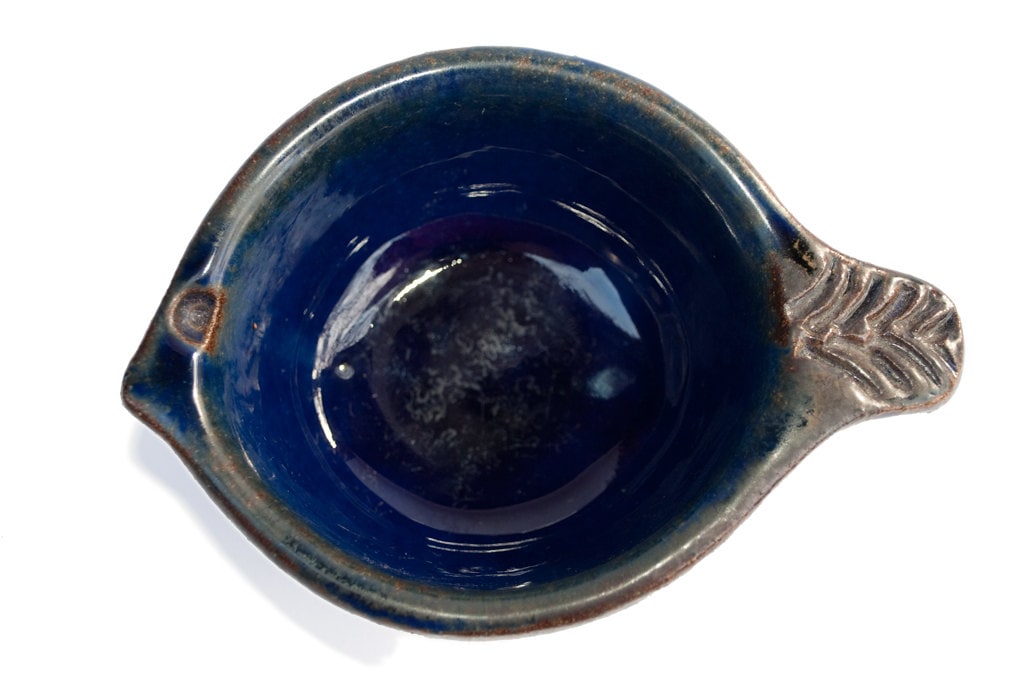
This is a diminutive working rolling pin and it's American-style, meaning not in one piece, that the barrel of unpainted maple rolls and the red-painted handles don't move with it. This lucky rolling pin has been mine almost as long as I can remember anything at all, and I still have the little bit of home-written verse that came with it. When new, long ago, it was used to roll out piecrust scraps, which would be dusted with nutmeg and then twisted and baked. I've never learned to like pies, which were baked in quantity at least once a week, with a crust of lard and flour and a bit of salt and nothing else, but I did like that crust. The little toy but working rolling pin has always been with me and always in my baking drawer. The weather's fresh and crisp and so a Breton chocolate pound cake is fresh out of the oven (see picture of one, along with the same Adams Extract pure vanilla used today), along with a batch of popovers fresh from the cast-iron pan of straight-sided cups with the little bit extra going into a buttered Bennington bird bowl. The popovers emerged in perfect form, not a one sunken in, all with perfect puffed-up mushroom-cap tops and a bit of hollowness inside, where the hot air expanded. I use James Beard's recipe but ignore his instructions that everything must be brought to room temperature, since Marion Cunningham in her Fannie Farmer baking book reported that step not necessary, which turns out to be true. It's so wonderful that summer's over!